
Abrasive blasting
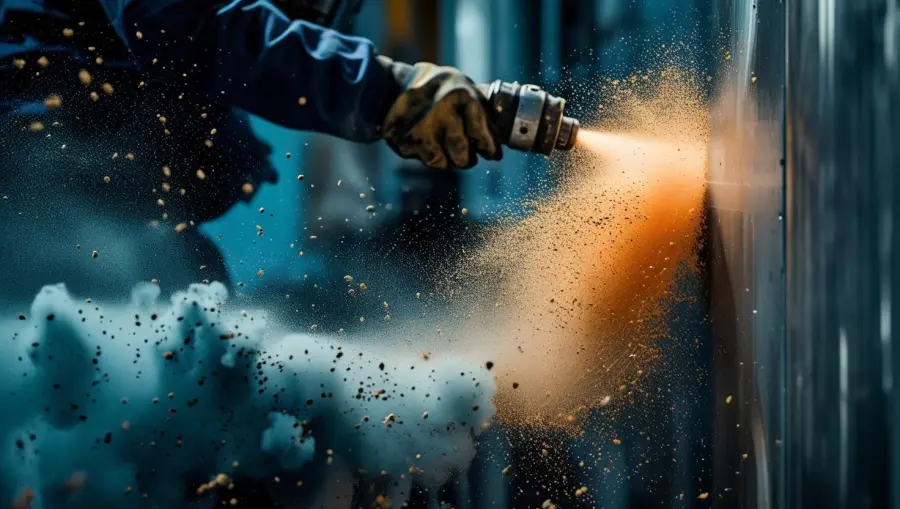
Vapor Blasting
Abrasive Used :Low pressure, water + abrasive
Key Uses : Ideal for delicate surfaces
Dry Blasting
Abrasive Used : Garnet, steel grit, sand
Key Uses : Heavy-duty cleaning of steel, concrete
Wet Blasting
Abrasive Used: Abrasive + water
Key Uses : Reduces dust, used in sensitive environments
Bead Blasting
Abrasive Used :Glass beads
Key Uses : Fine finish on stainless steel or aluminum
Shot Blasting
Abrasive Used :Steel shot
Key Uses : Concrete surface prep, floor cleaning
Soda Blasting
Abrasive Used : Sodium bicarbonate
Key Uses : Gentle cleaning, often for graffiti or fire damage
Surface Preparation Standards
These standards define the cleanliness and surface profile after blasting:
SSPC-SP10/NACE No. 2 – Near-white metal blast
SSPC-SP5/NACE No. 1– White metal blast (most thorough)
SSPC-SP6/NACE No. 3 – Commercial blast
SSPC-SP7/NACE No. 4– Brush-off blast (light cleaning)
ISO 8501-1 – International equivalent standards
Applications
- Steel bridges, tanks, ships
- Industrial flooring (concrete surface prep)
- Automotive and aerospace parts
- Petrochemical and marine structures
Surface Profile (Anchor Pattern)
- Measured in mils or microns (e.g., 2–3 mils or 50–75 µm)
- Affects coating adhesion; must match coating manufacturer’s recommendation
Safety & Environmental Considerations
- Proper PPE (respirators, suits, gloves)
- Dust control (containment, wet/vapor blasting)
- Compliance with OSHA and environmental regulations (e.g., silica exposure limits)