
Cold curing road marking
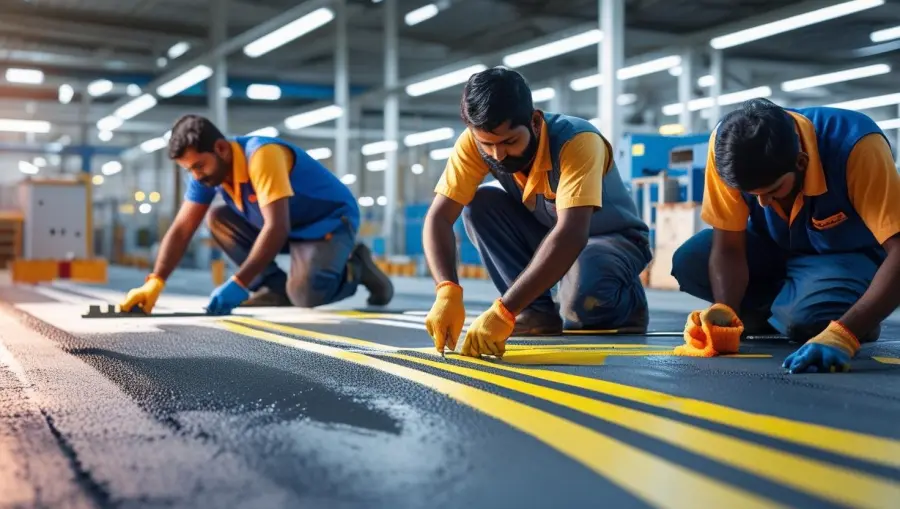
This refers to road markings applied using cold-applied, two-component materials that harden (cure) without heat—typically through a chemical reaction at ambient temperatures.
Key Features of Cold curing road marking
1. No Heating Required
Unlike thermoplastic markings, cold curing systems are applied at room temperature.
2. Two-Component System
Most cold-curing materials are reactive resins (often MMA – methyl methacrylate or epoxy-based) mixed just before or during application:
- Component A: Base resin with pigment
- Component B: Hardener (initiates curing)
3. Fast Curing
Typically cures in 15–30 minutes, depending on ambient temperature and material type.
4. Durable & Chemical Resistant
Excellent resistance to:
- Wear and tear
- Fuel and oil
- UV exposure
5. Good Reflectivity & Anti-Skid Options
Glass beads and anti-skid aggregates can be added during application for night visibility and safety.
Common Applications
- Urban roads and intersections
- Airports and runways
- Cycle tracks and pedestrian zones
- Custom logos and symbols on pavements
Limitations
- Slightly higher cost than paint or thermoplastic
- Requires accurate mixing of components for proper curing
Advantages:
- No heating equipment needed (reduces operational complexity)
- Quick installation and fast return to traffic
- Versatile for many surface types (asphalt, concrete)
- Excellent performance in extreme climates